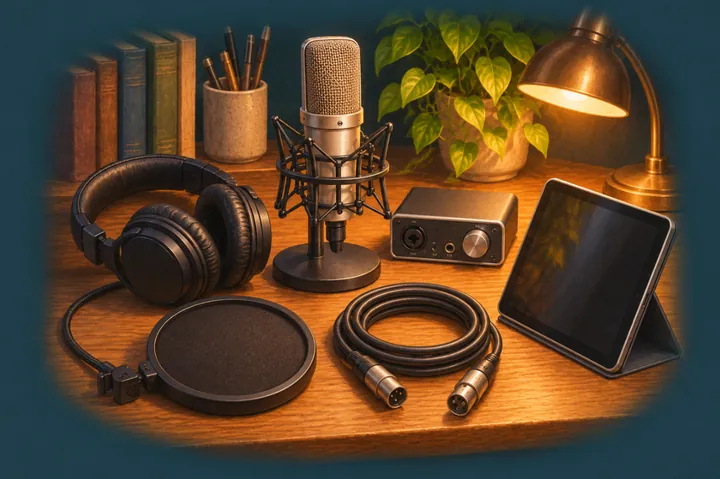
What every kit needs
- A microphone that suits spoken word
- A way to connect it to your computer: a USB microphone plugs straight in, an XLR microphone needs an audio interface
- Closed-back headphones so you can hear noise and clicks while editing
- A pop filter to stop bursts of air hitting the microphone
- A stand or boom arm that keeps the microphone still
Price ranges below are rough and move around. Check the current price before you buy.
Starter kit: under about $150
The cheapest setup that can pass ACX's technical check in a treated closet.
- Microphone: a USB dynamic microphone. Dynamic microphones pick up less of the room than condensers, which forgives a space that is not perfect. Samson Q2U or Audio-Technica ATR2100x-USB. Both have USB and XLR outputs, so they still work if you add an interface later.
- Headphones: Audio-Technica ATH-M20x
- Pop filter: any clip-on pop filter or a foam windscreen
- Stand: the desk stand in the box, or a basic boom arm
Solid kit: about $300 to $500
The setup most working home narrators would recognize.
- Microphone: a large-diaphragm condenser. Audio-Technica AT2020 is the long-standing budget pick. Rode NT1 costs more and has very low self-noise, which helps your noise floor.
- Interface: Focusrite Scarlett Solo or Audient EVO 4
- Headphones: Sony MDR-7506
- Also: an XLR cable, a pop filter and a boom arm or floor stand
A condenser hears everything. Only buy this kit if your space is already treated. See home studio setup.
Step-up kit: $800 and up
Worth it once paid work is steady, not before.
- Microphone: Neumann TLM 102 or Shure SM7B. The SM7B is a dynamic microphone that needs a lot of clean gain, so pair it with an interface that can supply it.
- Interface: Focusrite Scarlett 2i2 or Universal Audio Volt
- Headphones: Beyerdynamic DT 770 Pro
- Stand: a sturdy boom arm such as the Rode PSA1
What to buy first, in order
- Blankets or other treatment for the space
- Headphones (you can start learning to edit with them straight away)
- Microphone and, if needed, interface
- Pop filter and stand
- A tablet or e-reader for scripts, if you do not own one
What to skip
- Foam tile packs. Blankets do more for less.
- "Podcast bundles" with a no-name microphone, arm and mixer. Buy the named parts separately.
- A mixer. You are recording one voice. An interface is all you need.
- Portable vocal shields that clamp behind the microphone. They treat the wrong side. The reflections that matter come from behind you.
- Paid plug-ins until you know what problem you are solving.
Which matters most?
In order: the room, your microphone technique, your editing, then the microphone itself. If your recordings sound hollow or noisy, read home studio setup and fixing a noisy recording before you spend more.
Still deciding between microphone types? Read choosing a microphone.